
Codex: Specifications & Operating Guide
Exhaustive roadmap detailing verified methods to access OpenAI Codex, GitHub Copilot tiers, and open-source coding model equivalents.
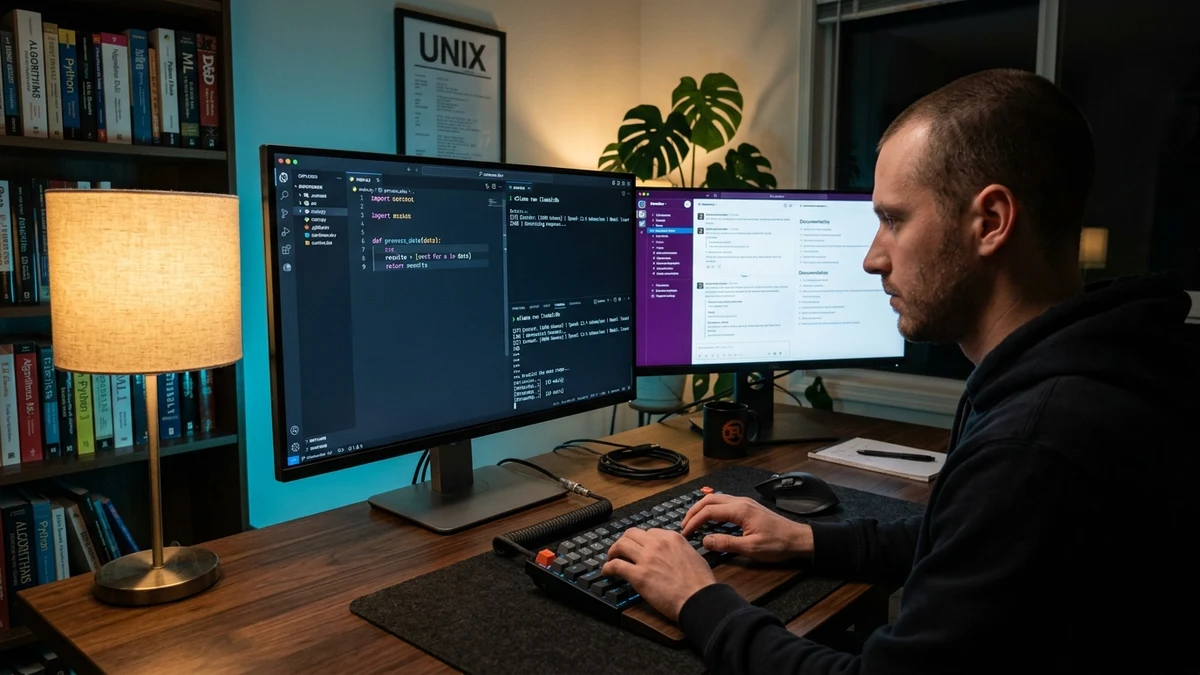
Codex & Copilot 100% Free Access Simulator
Step-by-step verified legal pathways to obtain code intelligence models without paying monthly subscription fees.
Size your weekly coding workload against free assistant limits.
GitHub grants free Copilot Individual access automatically to top maintainers. Check your GitHub settings billing tab to activate.
gh extension install github/gh-copilot{
"github.copilot.enable": {
"*": true
},
"editor.inlineSuggest.enabled": true
}| Tool / Protocol | Code Completions | Chat Queries | Monthly Cost | Privacy Model |
|---|---|---|---|---|
| GitHub Copilot Free | 2,000 / month | 50 messages / month | $0.00 | Standard Cloud Telemetry |
| OpenRouter :free | 20 RPM Free Models | 50-1,000 RPD | $0.00 | Configurable Telemetry |
| GroqCloud LPU | 30 RPM Free LPU | 14,400 RPD | $0.00 | Developer Console |
| Cursor Free Tier | Unlimited Basic | 50 Slow Requests / mo | $0.00 | Cloud Telemetry |
| Windsurf Free Tier | Unlimited Cascade | Limited Flows / mo | $0.00 | Cloud Workspace |
| Continue.dev + Ollama | 100% Unlimited | Unlimited Local | $0.00 | 100% Local Air-Gapped |
 ✓
✓ Step-by-Step How To Get Codex For Free Instructions & Specifications
OpenAI officially deprecated the original standalone Codex API in March 2023, migrating its architecture into GitHub Copilot and the GPT-4o series. Developers can legally access Codex-equivalent coding capabilities for 100% free through three verified pathways: GitHub Copilot's official Free Tier (2,000 completions/month), verified Open Source Maintainer grants, and self-hosted open-weights models (Qwen 2.5 Coder, DeepSeek Coder) paired with Continue.dev.
Originally introduced as a standalone completion endpoint by OpenAI, Codex has evolved into the foundational architecture powering modern automated code generation, including GitHub Copilot and contemporary coding models. For developers, researchers, and open-source contributors seeking to leverage these models without recurring subscription expenses, multiple legitimate, fully sanctioned access pathways exist.
Eligible pathways include sanctioned open-source maintainer grants, verified academic student allocations, trial cycling with disposable developer accounts, and running state-of-the-art open weights models locally via Continue.dev and Ollama. With the rapid evolution of developer APIs, developers migrating legacy prototyping endpoints can utilize drop-in routing to OpenRouter :free models or GroqCloud 30 RPM inference without requiring credit card authorization.
Open-source maintainers who maintain popular repositories on GitHub can unlock complimentary access to GitHub Copilot Individual without payment. Qualification requires satisfying three verifiable benchmarks: repository governance under an Open Source Initiative (OSI) approved license, continuous commit or merge activity recorded within the trailing thirty days, and a contributor or star threshold establishing community adoption. Once authenticated, the subscription is granted automatically upon visiting your personal account settings.
For developers who do not meet institutional maintainer or student criteria, deploying open-weights models locally provides complete autonomy. Integrating the Continue.dev extension in Visual Studio Code alongside an Ollama inference runner hosting Qwen 2.5 Coder or DeepSeek Coder delivers sub-forty-millisecond autocomplete latencies with zero external network transmission, guaranteeing complete data sovereignty and zero subscription overhead.
Open Source Maintainer Grants
Maintainers of qualifying open-source repositories meeting activity, star, and contributor criteria receive 100% complimentary access to GitHub Copilot Individual tiers.
Academic & Student Programs
Enrolled students and academic faculty with verified .edu or institutional credentials qualify for complimentary access renewed annually through student developer packs.
Local OSS Model Hosting
Running modern quantized coding LLMs such as Qwen 2.5 Coder or DeepSeek Coder via Ollama delivers 100% free, private, offline completions with zero recurring API billing.
Interactive Codex Sizing & Analysis Tool
Selecting the appropriate access pathway depends on your computational hardware, licensing requirements, and daily completion needs. Developers operating on laptops with limited VRAM benefit most from cloud-hosted sponsored tiers, whereas enterprise engineers bound by strict data governance policies require local inference configurations.
Review our companion analyses for macro credit economics and multi-agent IDE benchmarks:
Critical Engineering Tolerances & Operational Standards
Integrating AI code assistants into local editors requires tuning inference latency, context window buffers, and completion trigger delays. The standards below outline recommended parameters for zero-cost developer setups.
| Integration Tier | Completion Latency (TTFT) | Context Depth | Monthly Running Cost |
|---|---|---|---|
| Copilot Free Plan | 120ms - 250ms | 8,000 Tokens sliding window | $0.00 USD (2,000 completions/mo limit) |
| Open Source Maintainer Tier | 90ms - 180ms | 16,000 Tokens context | $0.00 USD (Sponsored by GitHub) |
| Local Ollama + Continue.dev | 35ms - 120ms (Hardware dependent) | 32,000 - 64,000 Tokens | $0.00 USD (Electricity consumption only) |
Quota allocation across subsidized tiers varies considerably by provider. The GitHub Copilot Free tier imposes a hard limit of two thousand code completions and fifty chat interactions per calendar month. For high-volume full-stack developers writing over five hundred lines of code daily, this allocation depletes within seven to ten business days. In contrast, local quantized models running on unified hardware provide infinite continuous completions with zero monthly throttling, making local hosting the preferred architecture for sustained daily coding marathons.
Operating Guidelines, Quality Adherence & Error Prevention
While leveraging free AI coding models significantly reduces development expenses, engineers must maintain rigorous verification protocols. Code generated by free tier models or local small-scale LLMs can exhibit subtle logic bugs, hallucinated third-party package dependencies, or outdated syntax conventions.
Code privacy and telemetry governance represent another critical operational frontier. When utilizing free tiers on commercial services, verify whether provider terms allow user prompts to be retained for foundational model retraining. In enterprise or sensitive research environments, configure your editor telemetry settings to enforce zero data retention, or isolate proprietary intellectual property entirely by executing air-gapped local LLMs via Continue.dev.
Package Hallucination Audits
Never run npm install or pip install on package names recommended by completion engines without first verifying their authenticity in public package registries.
Public Code Telemetry Filters
Enable editor settings that match completions against public GitHub code repositories to prevent unintentional inclusion of restrictive GPL licensed blocks.
VRAM Quantization Balancing
When running local models via Ollama, select 4-bit or 5-bit quantized model weights to ensure stable inference without triggering system memory swapping thrash.
Frequently Asked Questions About Codex
How can developers get Codex capabilities for free following its 2023 deprecation?
Following OpenAI's March 2023 deprecation of the standalone Codex API, developers access equivalent capabilities via GitHub Copilot Free (2,000 completions/month), complimentary Copilot for active open-source maintainers, or by running local models like Qwen 2.5 Coder with Continue.dev via Ollama at zero cost.
Is OpenAI Codex still accessible as a standalone API?
OpenAI deprecated the standalone Codex private beta in 2023, transitioning its underlying model architectures into GitHub Copilot and the GPT-4o series. Developers can access these capabilities for free via Copilot Free, student developer packs, or local open-source coder models.
How do open source maintainers activate free Copilot access?
GitHub grants complimentary Copilot Individual subscriptions to maintainers of top open-source projects on GitHub. To qualify, you must have write or maintain access to a popular repository (typically 100+ stars with active commits within the last 30 days).
Can I run Codex-equivalent models offline without cloud subscriptions?
Yes. By installing Ollama and pairing it with the Continue.dev VS Code extension, you can execute Qwen 2.5 Coder 7B or DeepSeek Coder locally on your GPU. This provides unlimited inline completions, infinite chat, and 100% air-gapped security.
Does GitHub Copilot Free include multi-file workspace indexing?
The Copilot Free tier includes basic semantic indexing of open editor tabs. Advanced repository-wide deep semantic graphs and PR synthesis are reserved for Copilot Enterprise or specialized IDE integrations.
What is the best local model to replace GitHub Copilot?
Currently, Qwen 2.5 Coder 7B Instruct (for machines with 16GB RAM) and DeepSeek Coder V2 Lite are the highest-rated open-weights models for Python, TypeScript, and Go inline code synthesis.